Portfolio and statement. 2023


Statement
Beginning this project I pondered over different methods and materials I could use.
With the module targeting our experimentation as artists there were many avenues to consider.
I’ve previously explored many different techniques of art so I decided to expand on notes and ideas that I had previously examined.
I’d had an idea a year before of raised paintings, and had cultivated some small pieces and designs as prototypes.
I decided to explored this idea in more depth, taking the prototypes I had made earlier and using them as a reference for recreation and development.
I began this work by sticking down pieces of card to a board avoiding method or mediation in the process.
I wanted the patterns that arose to occur in an uncontrolled fashion, as if they were channeling from my subconscious and forming patterns of unknown origin.
I finished this stage of the work using my inner guide/feeling. Once I felt it was done, it was done. No touch ups, no add ons and no re-placing pieces.
I ended up making a few of these boards. On one I used card squares and rectangles, on another I used more flowing shapes. I also decided on one of the boards to used plaster filler to take away the sharp edges of the card, which gave the piece a look akin to a diorama of hills and valleys.
Moving on to the next stage of this experiment, the painting.
I didn’t feel the uncontrolled method I had used in the first stage would be suitable for this, so I began to think about what I wanted to paint and what would work with the layout of the board.
I consider the shapes and their placements as a guide for the painting, thinking about how this made me feel and what images and thoughts this brought to mind.
In this wondering scanned my studio and noticed some similarities, there was a relationship shared between the patterns on the boards and patterns of the room around me.
I decided to use the studio as the inspiration for the painting.
I studied at the shapes, edges and lines of the room. The slant of the roof and the deep arches within which the windows were placed. Thinking over the perspective in my mind, skewing it and distorting with my vision and my thoughts.
I concluded not to design the ideas for paintings but instead channel them from my inspiration, avoiding normality and distorting the perspectives and positions of the features of the room.
I wanted these pieces to look out of sorts and incorrect, unidentifiable but with sense that they could be depicting something recognisable.
My aim to leave the viewer with a peculiar feeling of significance, like a contorted memory, buckled from surfacing to the conscious mind.
The process of creating the raised paintings evoked to my mind the children’s toy Lego.
How the building blocks layer on top of one another, a similarity shared with the action I’d taken in layering card during the experiment.
This got me thinking about construction, how something can be designed so perfectly as to fit together with something else with complete accuracy.
I resolved that my next experiment would be engineered and sculptural in nature.
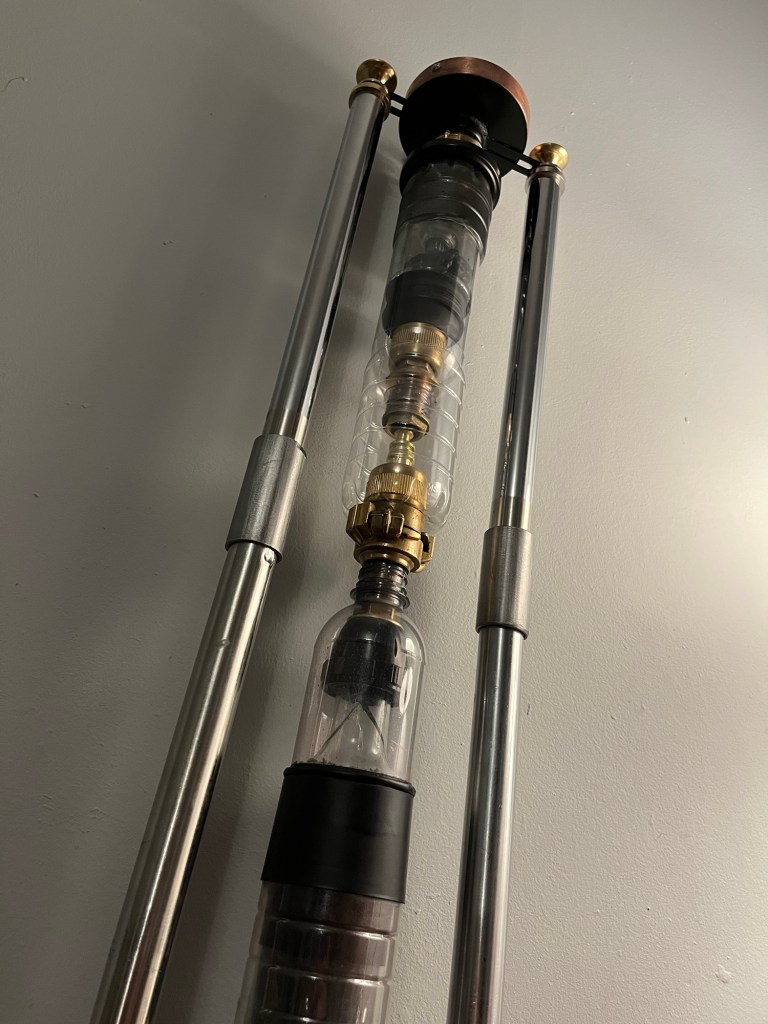
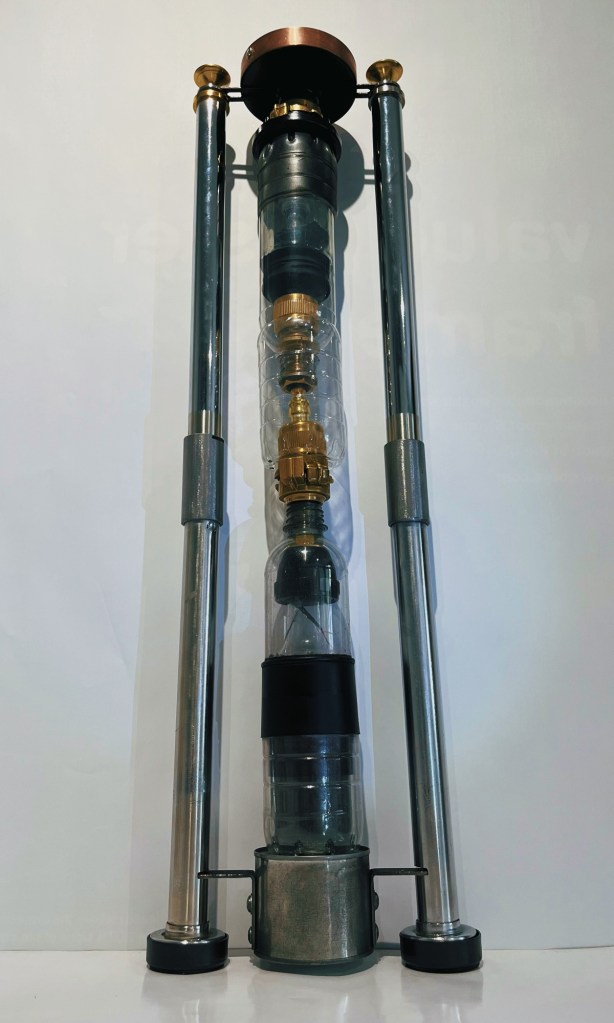
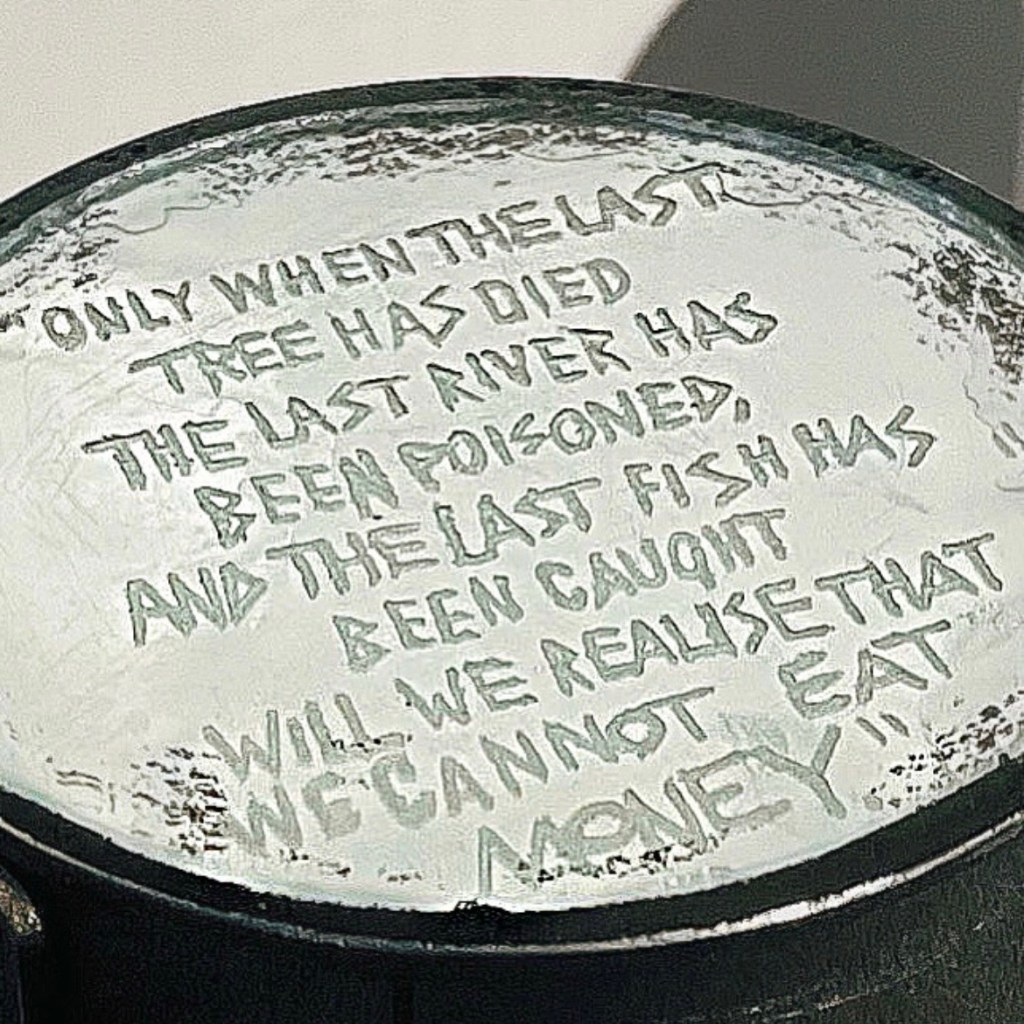
I wanted to send a message with this piece. Focused on time and how much of it we have to reverse damages we’ve affected on our planet through pollution.
After considering many other possibilities I concluded to create an hour glass.
Using pipes and parts that are relevant to oil mining and that would display pollution.
I used materials recycled materials that would often end up in the sea or landfill, i.e. plastic bottles, tin cans and scrap bits and bobs.
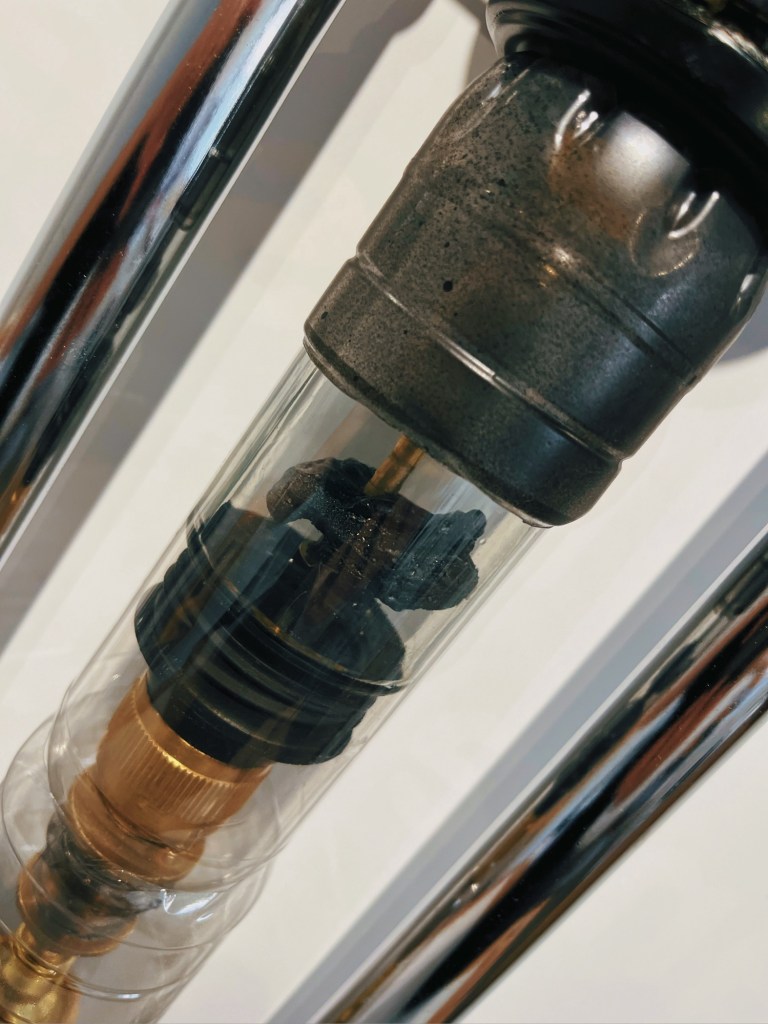
I also used plumbing part to simulate and represent machinery used for transferring oil.
During the creation of this project I found myself frequently modifying and removing pieces of the sculpture, this led to me taking many risks, some where easy and straightforward, but some weren’t so simple and they required extra effort and skill.
An example of this was an incident early on, when I had to take apart a section of one of the hourglass chambers.
I did this in order to exchange a fitting that wasn’t quite up to standard of the design.
I had already attached these parts together with super glue and the chamber surrounding
this fitting was made of glass, so replacing this part came as a challenge and a risk.
I managed to fix this issue, using patience, pliers, and only minor intervention with a Dremel, which was necessary for removing material from the top bolt of the fitting.
The rest of the process was just about slowly tugging at the fittings with pliers until became loose enough to be removed.
I replaced the part with a piece I had modified and fixed the structure back together.
Altogether there were many instances in the creation of this piece that came with difficulties, i.e. alterations and replacements,
One mistake which at first seemed disastrous turned out to be a blessing in disguise.
I was in fixing an end cap to the base of the sculpture, I accidentally smashed one of the glass chambers. I hadn’t been paying attention to the amount of force I was imposing on the glass when attaching a fitting to its opening and I basically snapped the glass in half cutting my hand in the process.
Though I was originally going to replace the glass chamber, came up with the idea of gluing the bottle back together.
I realised that the cracked glass better helped convey the message of the piece, embodying the principle of the matter being addressed through its fractured aesthetic.
Whilst working in the studio I was faced with limited light, so I decided to take the studio outside, I wanted a place where I could fiddle and experiment with parts whilst remaining stimulated to the task. I’ve always felt at home amongst trees and grass, so I took to the garden with a few boards to work on.
I did this every day until I worked out the internal structure of the piece, a system of tubes the same width throughout that would carry the gravel from chamber to chamber. It took a long time to figure but eventually I got it done and with success as I barely had to make any custom pieces for this part of the project.
I believed the experimental element of this project to be a success, I discovered new techniques and learned a bit about my strengths and weaknesses, and as far as the outcome of the work as a piece of art is concerned I am happy.
There are many areas during the development of this project that exceeded my expectations, for example the aesthetic of the piece in relationship to its functionality, and its ability to convey its message.
However there are elements of this piece and the process of its construction that didn’t work. Mistakes were made and although some mistakes are unavoidable, I recognise that there were mistakes made that could have been avoided with patience and more planning.
 S.R.F.Thomas